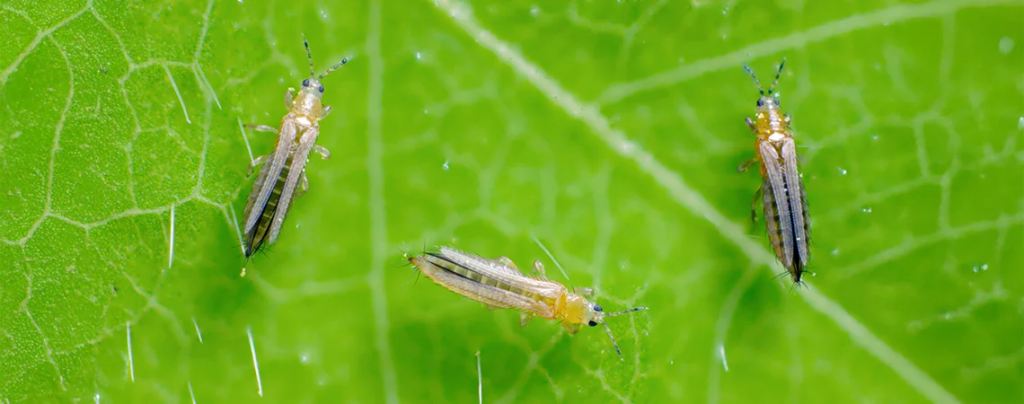
Thrips on Cannabis: How to Get Rid of Thrips on Cannabis Plants. Unsure if those silvery streaks are thrips damage that cannabis growers dread? Learn what to check, what to treat first, and how to keep them from coming back.
Few things sink a grower’s mood faster than spotting fresh pest marks on otherwise healthy leaves. The good news is that thrips on cannabis are common, and they’re rarely a disaster when you catch them early and respond with a clear plan.
Cannabis thrips are tiny, fast-moving insects that scrape plant tissue and drink the sap, leaving behind silvery streaks, pale speckling, and a slowdown in vigorous growth. Left unchecked, thrips on cannabis plants can multiply quickly and weaken plants at key moments.
This guide walks you through identifying the problem, understanding the damage thrips can cause to cannabis, and choosing practical, grow-friendly solutions. With prompt action, it’s entirely possible to protect your crop and avoid the stress of searching for how to get rid of thrips on cannabis plants or how to kill thrips on cannabis plants at the last minute.
What are thrips on cannabis?
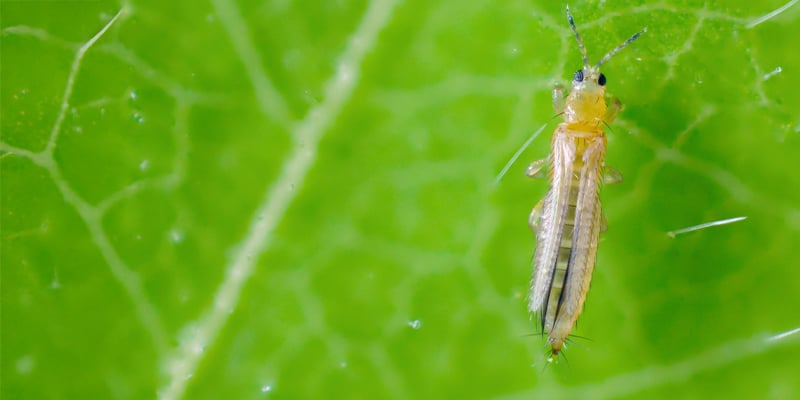
Thrips are tiny, slender insects that feed by piercing plant cells and sucking out the contents. On cannabis, they’re usually pale yellow, tan, or dark brown, and you’ll often spot the adults darting away when you disturb a leaf, while the larvae hang around and keep feeding.
In practice, cannabis thrips are less about one specific species and more about a familiar group of sap-suckers that love soft, fast-growing plant tissue. They tend to hide on the underside of leaves and along veins, which is why an infestation can build before it’s obvious.
Thrips on cannabis plants are common both indoors and outdoors for simple reasons: they hitchhike in on new clones, soil, tools, and even clothes, and they also blow in on the wind outside. Warm temperatures, low humidity, and dense foliage make conditions even more favourable for them, so even well-run grow rooms can still see outbreaks when the timing is right.
How to spot thrips on cannabis plants
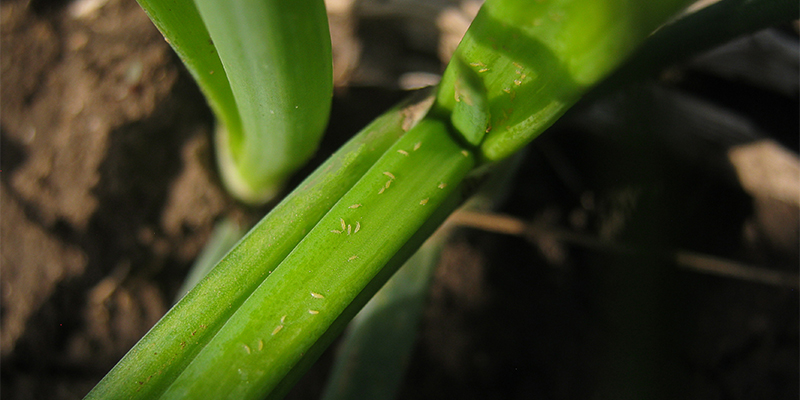
Spotting thrips early is mostly about knowing what you’re looking for. Cannabis thrips are rice-grain-sized as adults (around 1–2 mm), often straw-coloured or brown, with narrow wings that can look fringed under a loupe; the larvae are smaller, pale, and wingless.
Before noticeable leaf scarring shows up, early warning signs include tiny black specks of droppings, slight bronzing on new growth, and leaves that lose their shine. With a calm, methodical check, you can catch thrips on cannabis plants while the population is still small.
They like to hide where it’s protected and tender: on the underside of leaves, along midribs and veins, inside tight nodes, and around fresh tips. Gently tap a suspect leaf over white paper to see them move.
If you’re also ruling out other culprits, our guide to insect pests helps you compare symptoms quickly.
Thrips damage cannabis: What does it look like?
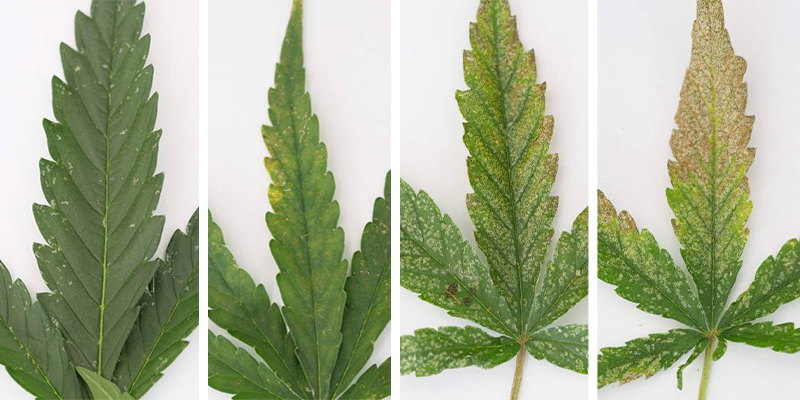
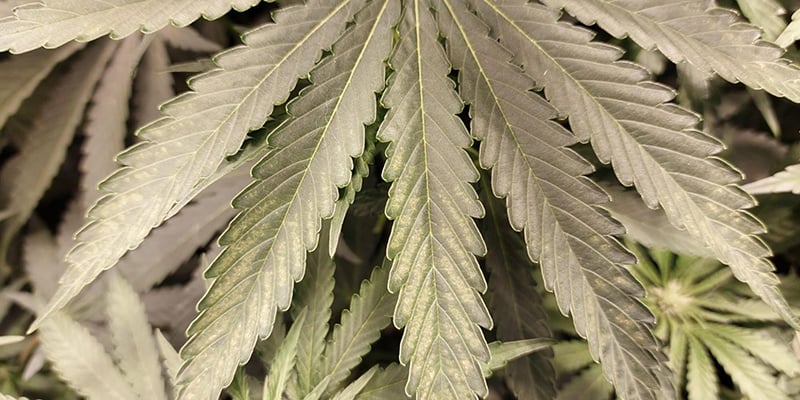
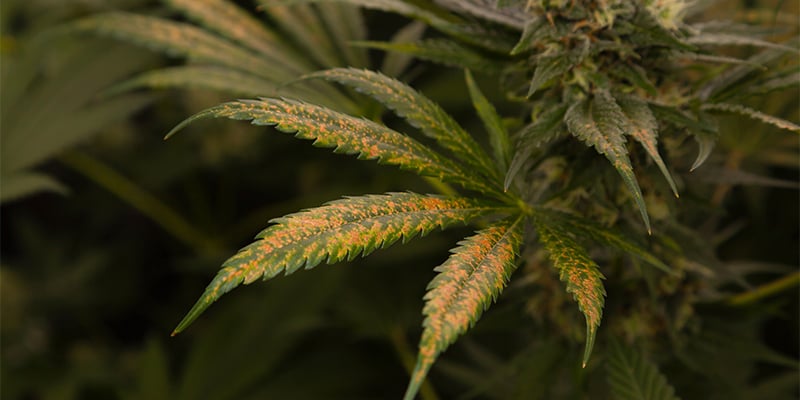
Classic thrips damage that cannabis growers notice is a silvery, scratched look on the leaf surface, often paired with fine stippling (tiny pale dots). As feeding continues, leaves may curl at the edges, look tired even with good conditions, and overall growth can slow as the plant diverts energy into repair.
It’s easy to confuse the symptoms with other pests. Spider mites usually leave more uniform speckling plus webbing, while leafhoppers tend to cause broader yellowing and “hopper burn”. Thrips, on the other hand, create irregular streaks and patches that look like the leaf has been lightly sanded.
They’re stubborn because of a simple life cycle trick. Adults insert eggs into plant tissue; larvae feed on foliage; then pupae develop off the plant (often in the medium) before new adults emerge. With rapid reproduction and some resistance to sprays, repeated treatment is usually needed to catch each new wave.
How to get rid of thrips on cannabis plants
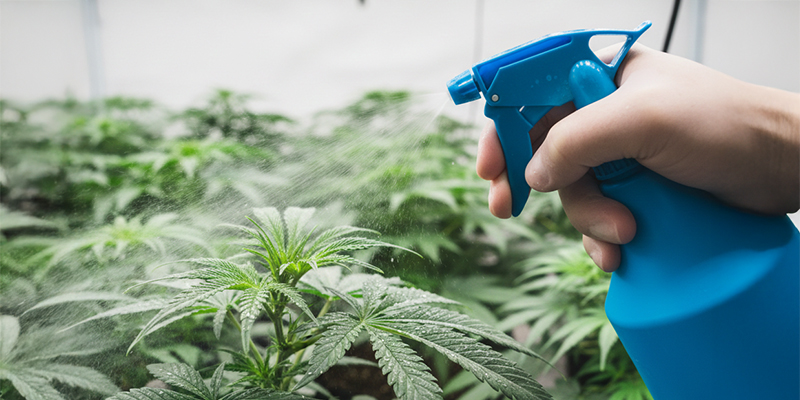
Once thrips on cannabis are confirmed, speed matters; waiting a week is how a “few bugs” becomes a full-on cycle of re-infestation. The most reliable approach is layered: knock down the numbers fast, then keep the pressure on until you’ve broken their life cycle.
- Isolate affected plants and remove the worst-hit leaves to reduce breeding sites.
- Rinse foliage (especially undersides) with a gentle spray to physically dislodge adults and larvae.
- Apply a suitable control (e.g., insecticidal soap or neem) and repeat on a schedule to catch new hatchlings.
- Treat the medium and tidy the grow area, as pupae often develop off the plant.
- Add sticky traps and keep monitoring, even after symptoms fade.
For more natural options that work well as part of a rotation, see our guide to natural pest repellents.
How to kill thrips on cannabis plants
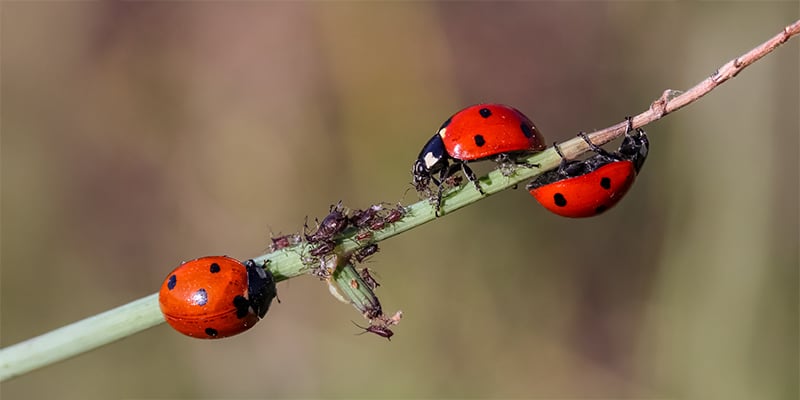
Targeted control works best when you match the method to the grow stage and infestation level. For light outbreaks, organic contact sprays can reduce populations quickly, but coverage is everything; hit leaf undersides, nodes, and new tips, then repeat to catch fresh hatchlings.
Common grow-friendly options include insecticidal soap, neem-based products, and horticultural oils (used carefully to avoid stressing plants). A steady routine that alternates products helps avoid resistance and keeps pressure on the colony.
Biological control is a smart move, especially indoors. Beneficial insects can hunt thrips where sprays struggle, and they’re ideal for ongoing prevention once numbers are down. Predatory mites such as Amblyseius cucumeris and Amblyseius swirskii target larvae, while minute pirate bugs (Orius) go after multiple life stages.
When stronger measures may be necessary, such as severe infestations or repeated rebounds, consider integrated pest management with stricter sanitation, medium treatment, and, where legal and appropriate, regulated pesticides used according to label guidance and well before harvest.
Can you still use the flowers if you had thrips?
Finding thrips in flower is stressful, but it doesn’t automatically mean your harvest is ruined. The key is separating old cosmetic damage from an active infestation; scarred leaves from earlier feeding won’t “spread” later, but living insects and their droppings can still end up in and around buds.
Thrips on cannabis during flowering should be handled with extra caution, because many sprays and oils aren’t suitable once flowers are forming. If the infestation is under control by harvest, many growers still use the flowers after careful trimming and a thorough inspection.
For safety and quality, take a conservative approach:
- Prioritise removing badly affected fan leaves and keeping the space clean.
- Avoid harsh treatments close to harvest, and never apply unapproved products to buds.
- Consider a gentle bud wash where appropriate, then dry properly to prevent mould.
If you’re seeing live insects right up to chop day, it’s often better to slow down, clean up, and make sure the final product is something you’re comfortable consuming.
How to prevent thrips on cannabis
https://magicmushroomgrowkits.ca/Prevention is mostly about making your grow less welcoming, then spotting problems before they get momentum. Start with hygiene: clean tents, trays, pots, and tools between runs, and avoid bringing in uninspected clones or houseplants that can carry hitchhikers.
Environmental control helps too. Thrips thrive in warm, dry, still air, so keep airflow consistent, avoid letting the room overheat, and don’t allow dusty, stressed plants to linger. Tidy floors and remove dead leaf litter, because pupae can develop off the plant.
Build a simple monitoring routine and stick to it:
- Check leaf undersides and fresh tips twice a week with a loupe.
- Use yellow sticky traps near the canopy to catch flying adults early.
- Quarantine any new plant material for a week and re-check before it joins the main space.
Catching the first few insects is always easier than dealing with a full cycle.
Thrips cannabis FAQ
Q: Are thrips harmful to humans?
A: Thrips aren’t known to be dangerous in the way biting pests are, but nobody wants insects or residue in their end product; good hygiene, careful trimming, and avoiding unsuitable sprays in late flower matter.
Q: How fast do thrips spread on cannabis?
A: Fast. They reproduce quickly and can move from plant to plant on airflow, clothing, tools, and new plant material, so a small problem can escalate in days.
Q: Can thrips return after treatment?
A: Yes. Eggs are tucked into plant tissue, and pupae can develop in the medium, so you can see “comebacks” if you stop too early; follow-up treatments and monitoring are what finish the job.
Thrips on cannabis: Is your harvest still safe?
https://beardeddragonforsale.uk/Spotting thrips on cannabis is annoying, but it’s usually manageable when you stay calm and act with a plan. Confirm the signs early, tackle the problem with a combination of physical removal, appropriate treatments, and (where possible) beneficial predators, then keep the pressure on until the life cycle is broken.
After that, prevention protects your next run: keep your kit clean, control the environment, and monitor regularly so small issues don’t turn into a headache. For more step-by-step cultivation support beyond pests, explore our full cannabis grow guide.