What Is Reishi, Exactly?
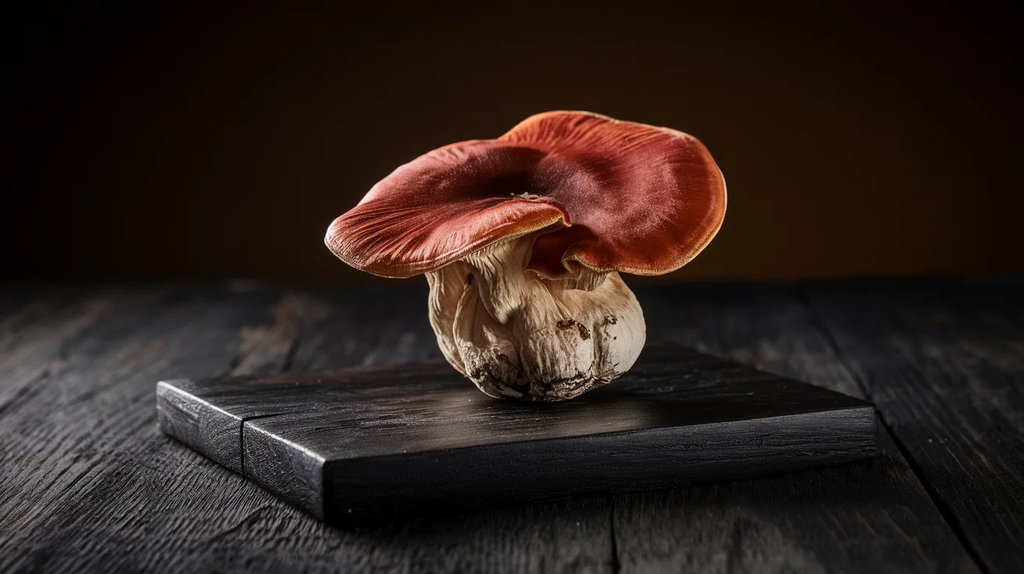
Ganoderma lucidum — known as “lingzhi” in Chinese and “reishi” in Japanese — is a woody, shelf-like mushroom that grows on hardwood trees. It’s one of the most studied medicinal mushrooms in the world, with a research base covering everything from immune modulation to liver protection. Traditional Chinese Medicine classified it as a “superior herb” — meaning it could be taken long-term without harm. Modern pharmacology is starting to catch up to that ancient reputation.
The two main bioactive compound classes in reishi are polysaccharides (particularly beta-glucans) and triterpenes (ganoderic acids and related compounds). Both play a role in reishi’s health effects — but for sleep specifically, the triterpenes may be doing more of the heavy lifting than the supplement industry typically acknowledges.
The Science: How Reishi Affects Sleep
The GABA Connection
If you’ve ever taken a benzodiazepine, had a glass of wine before bed, or used any prescription sleep aid, you’ve interacted with the GABA system. GABA (gamma-aminobutyric acid) is your brain’s primary inhibitory neurotransmitter — it slows down neural activity and helps you shift from alert wakefulness into sleep. Most pharmaceutical sleep aids work by amplifying GABA’s effects, often crudely and with significant side effects.
Reishi appears to work through a similar pathway — but more gently. A 2025 study published in Phytomedicine investigated a traditional herbal formulation containing Ganoderma lucidum and found it significantly upregulated Gabrd mRNA — the gene encoding the delta subunit of the GABA-A receptor — in mouse brain tissue (Chen et al., 2025). The treated mice showed reduced sleep latency (they fell asleep faster), prolonged sleep duration, and reduced locomotor activity. The researchers also found elevated levels of GABA itself, along with BDNF (brain-derived neurotrophic factor) and cAMP — a signaling molecule involved in memory consolidation and mood regulation.
This matters because it suggests reishi isn’t just sedating you — it’s nudging the brain toward its natural sleep architecture, rather than hammering it into chemically-induced unconsciousness the way a sleeping pill does.
The Triterpene Story
Here’s where it gets interesting from a pharmacology standpoint. Reishi contains dozens of unique triterpenes — specifically ganoderic acids and ganoderenic acids. A 2024 study in Phytomedicine used cutting-edge metabolomic analysis to identify exactly which compounds in medicinal Polyporales mushrooms (including Ganoderma lucidum) are responsible for sedative-hypnotic effects
The finding: six specific triterpenes — ganoderic acids B, C1, F, and H, plus ganoderenic acids A and D — were the primary sleep-promoting compounds shared across the five medicinal mushrooms tested. These were not found in the polysaccharide fractions. This is a significant finding because the supplement industry often emphasizes polysaccharide content as the main quality marker, when it turns out the triterpenes may be carrying most of the weight for sleep specifically.
Pain and Inflammation: The Indirect Route to Better Sleep
One of the most underappreciated reasons people sleep poorly is chronic low-grade pain and inflammation. You don’t have to be in agony — even mild joint discomfort, tension headaches, or generalized aching can fragment your sleep architecture without you consciously registering “pain” as the culprit.
Research published in Cellular and Molecular Biology examined lucidone D, a triterpene isolated from Ganoderma lucidum fruiting body, and found it had meaningful anti-inflammatory and analgesic effects in addition to direct sedative activity. The compound inhibited inflammatory mediators including NO, TNF-α, and IL-6 while also reducing pain responses in mouse models.
If inflammation is quietly sabotaging your sleep, reishi may help via two routes simultaneously: directly through GABAergic signaling, and indirectly by quieting the inflammatory noise that keeps your nervous system on alert through the night.
Who Benefits Most From Reishi for Sleep?
Not all insomnia is created equal, and reishi isn’t the right tool for every situation. Based on both the research and my clinical experience, it seems most likely to help people whose poor sleep falls into one of these categories:
- Stress-related insomnia: If your mind races at night, reishi’s calming effect on the nervous system via GABAergic pathways directly addresses the mechanism keeping you awake.
- Fatigue-that-won’t-quit: There’s a frustrating phenomenon where people are tired all day but can’t sleep at night. Reishi’s adaptogenic properties support energy regulation during the day, which can paradoxically improve nighttime rest.
- Inflammation-linked poor sleep: If you wake up achy, have arthritis or fibromyalgia, or know your inflammatory markers run high, reishi’s dual anti-inflammatory and sleep-promoting actions make it worth considering.
- Shift workers and people with irregular schedules: Anecdotally, reishi seems to help people reset their sleep rhythms more gracefully than melatonin alone.
Who is it less likely to help? People with primary sleep apnea (that needs a CPAP, not a mushroom), those with severe clinical depression driving their insomnia, or anyone expecting rapid sedation like a sleeping pill. Reishi is a slow burn — subtle and cumulative rather than immediately dramatic.
Which Form of Reishi Is Best for Sleep?
This is where the details actually matter. Not all reishi supplements are equal, and for sleep specifically, the extraction method and plant part used make a meaningful difference given the triterpene-centric mechanism.
| Form | Triterpene Content | Polysaccharide Content | Sleep Use |
|---|---|---|---|
| Fruiting body (dual extraction) | High | High | Best overall |
| Fruiting body water extract | Low | High | Moderate |
| Mycelium biomass (grain-grown) | Very low | Variable (often grain starch) | Poor |
| Cracked spore powder | Very high | Low | Good for triterpene effects |
Since the sleep research points to triterpenes as key active compounds, you want a dual-extract or cracked spore powder from a company that provides a Certificate of Analysis showing triterpene content — not just beta-glucan percentage. A COA that only certifies polysaccharides tells you almost nothing useful for the sleep use case.
On dosage: most of the positive research uses doses in the range of 1.5–3 grams of fruiting body equivalent per day. Start at the lower end and take it in the evening, roughly 60–90 minutes before your target bedtime.
How Long Does It Take to Work?
Managing expectations here is important. Reishi is not Ambien. You won’t feel it working the night you take your first capsule. Most people who respond well report noticing changes over 2–4 weeks of consistent use — a gradual sense that falling asleep is easier, that they’re waking less frequently, or that they feel more rested in the morning even if total sleep time hasn’t changed dramatically.
If you’ve seen zero change after 6–8 weeks of a quality product at a meaningful dose, reishi for sleep probably isn’t your solution. At that point it’s worth a conversation with your doctor about sleep hygiene, a sleep study, or other interventions more targeted to your situation.
06Safety and Who Should Be Cautious
Reishi has an excellent safety profile when used as directed. That said, a few caveats are worth knowing:
- Blood thinners: Reishi has mild anticoagulant properties. If you’re on warfarin, clopidogrel, or similar medications, check with your prescriber first.
- Immunosuppressants: Since reishi actively modulates immune function, there’s a theoretical interaction with drugs like cyclosporine.
- Autoimmune conditions: Reishi’s immune-stimulating effects could theoretically exacerbate certain autoimmune diseases. The evidence is thin, but I flag it as a precaution.
- Pregnancy and breastfeeding: Insufficient safety data — skip it during both.
For otherwise healthy adults using quality products from reputable suppliers, the risk profile is very low — especially compared to pharmaceutical sleep aids that carry real risks of dependence, tolerance, and cognitive impairment with long-term use.